描述
| 技术规格 | |
|---|---|
| 模型 | YGQD-350 |
| 力量 | 5.5千瓦 |
| 容量 | 800 kg/h |
| Max Raw Material Size (at 8mm cut) | 120 mm |
| Material Temperature | −5°C to −10°C |
| Dicing Yield (5mm cube) | 80–85% |
| Cutting System | Three-part blade (3D) |
| Blade Structure | Cantilever (single-blade removal) |
| 尺寸(长×宽×高) | 1600 × 980 × 1580 mm |
| 机器重量 | 450 kg |
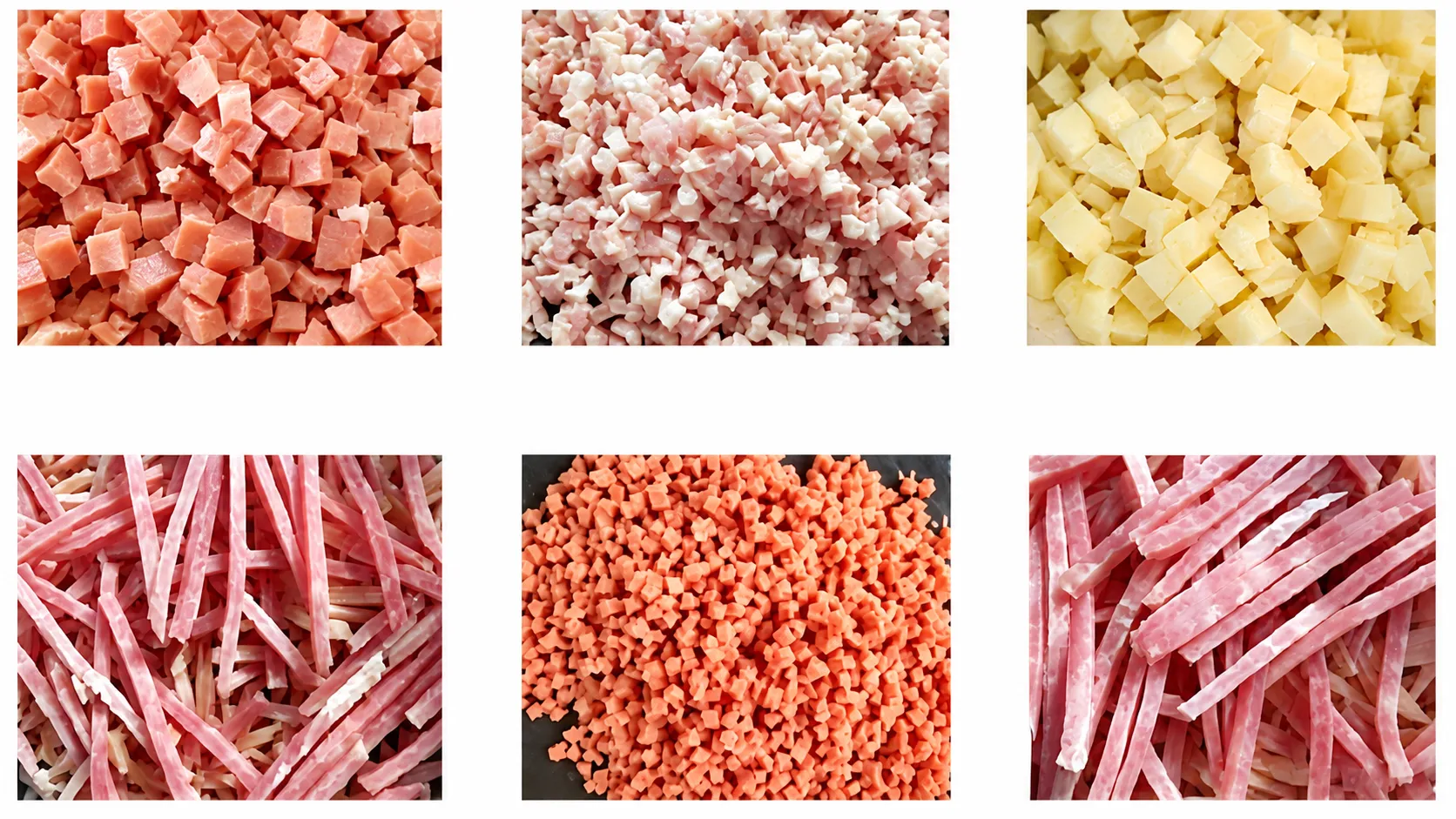
| Cube Sizes | 3×3×3 to 10×10×10 mm |
| Strip Sizes | 3×3 to 10×10 mm width/height, length 1.6–11 mm and above |
| Custom Thickness | Up to 12 mm inside profile |
| 建造 | SUS304不锈钢 |
| 电压 | 380伏/50赫兹 |
| 认证 | 符合CE标准 |
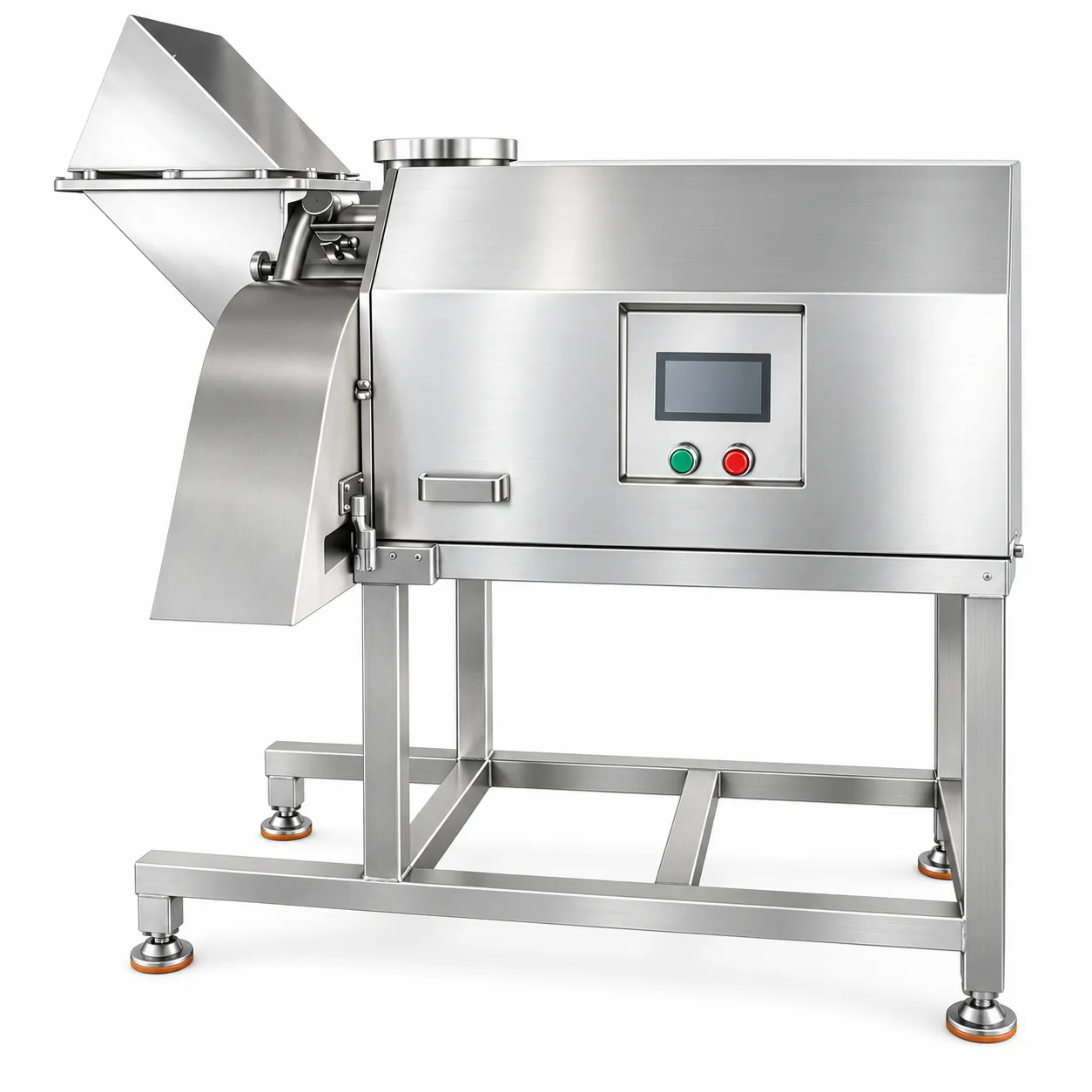
3D Frozen Meat Dicer — Three-Part Cutting System for Frozen Meat Cubes
The YGQD-350 3D Frozen Meat Dicer uses a three-part cutting blade system to dice, strip-cut, and sheet-cut frozen meat, fat, and mixed food materials at -5°C to -10°C material temperature. The three-blade architecture distributes the cutting action across three independent blade planes, reducing the compression force at each blade pass compared with two-blade 2D systems and achieving measurably higher dicing yield: 80–85% at 5 mm cube size, with preserved original texture and reduced cellular damage.
At 800 kg/h and 5.5 kW with a maximum raw material input dimension of 120 mm (at 8 mm cut size), the YGQD-350 serves commercial dicing operations where output yield and product texture quality at small cube sizes are the primary performance criteria — high-value retail diced beef, export-format lamb cubes, and precision-portioned raw ingredients for further processing where the 80–85% yield figure translates directly to reduced raw material cost per tonne of finished product.
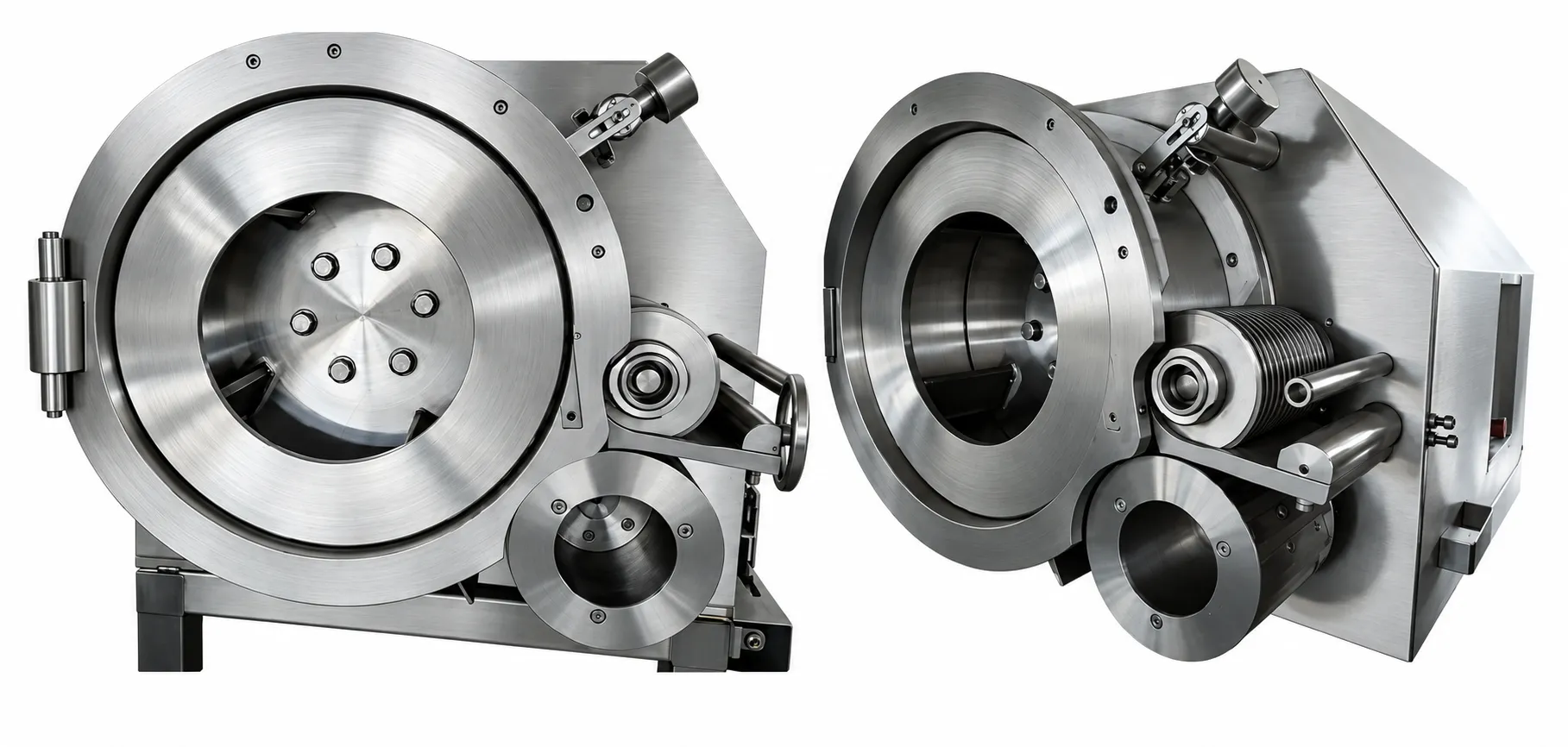
Three-Part Cutting System: Higher Yield Through Lower Compression
The distinction between 2D and 3D dicing is a fundamentally different approach to the mechanics of product separation. A 2D dicer produces the cube cross-section in two blade passes, each of which applies compression to the product as the blade advances through it. In frozen meat, this compression forces intercellular fluid outward from the cut face, reducing yield and leaving a compressed surface on each cube face that affects texture in the finished product after cooking or seasoning.
The YGQD-350’s three-part cutting system distributes the cutting action across three blade planes, reducing the compression force at each individual blade pass by approximately one-third compared with a two-blade system at the same cube size. The result is a measurably higher dicing yield (80–85% at 5 mm cube size), a less compressed cube surface, and better preservation of the original meat texture — outcomes that matter most in high-value products and export-market applications where cube uniformity and surface quality are part of the product specification.
Cantilever Blade Structure — Single-Blade Removal
In a conventional three-blade dicer, accessing any individual blade for sharpening or replacement requires partial or full disassembly of the blade carrier assembly. The YGQD-350’s cantilever structure mounts each blade independently on its own cantilever arm, allowing any individual blade to be pulled clear of the cutting chamber without disturbing the adjacent blade positions. A single blade can be removed, sharpened on an external jig, and replaced in under five minutes, compared with 20–40 minutes for a full assembly disassembly and rebuild.
Material temperature range: −5°C to −10°C. This is the optimal frozen processing window: rigid enough for clean cuts without tearing, warm enough to avoid excessive blade stress.
Cleaning: SUS304 stainless throughout. Cutting area can be washed with direct high-pressure water — no dead corners in the dicing chamber.
Suitable Materials and Applications
- Frozen lean meat (beef, pork, lamb, poultry) at −5°C to −10°C — diced cubes and strips for retail and export
- Frozen fat and mixed lean-fat material for sausage filling ingredient preparation
- Mixed food ingredient blocks containing meat, fat, and herb inclusions
- High-value retail diced beef and lamb where 80–85% yield at 5 mm cube size delivers measurable raw material cost reduction
- Export-format meat cubes requiring consistent size, surface quality, and low compression damage for transit and shelf-life standards
关于制造商
Shijiazhuang Sunshine Machinery Co., Ltd. (est. 1999) manufactures complete meat processing lines from Hebei Province, China. Products include sausage cutters, meat grinders, dicers, vacuum fillers, clipping machines, brine injectors, and smoke houses. All carry CE certification and use SUS304 construction. Third-party supplier verification supported by SGS / TÜV Rheinland. Our Brazil-registered entity serves South American markets.
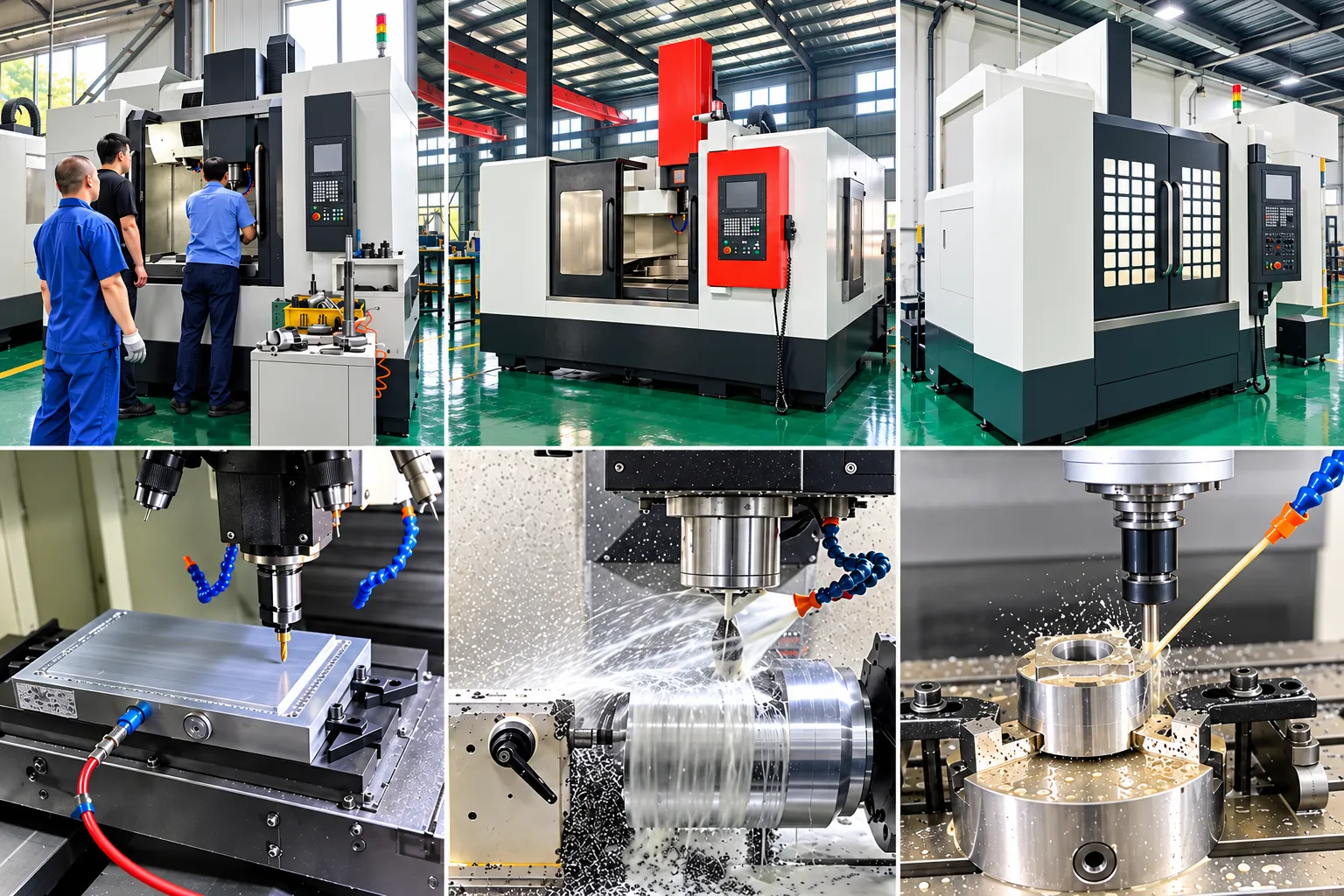
An 8-hour continuous full-load test is mandatory before any unit is approved for shipment. The test exercises the complete cutting cycle under production conditions and all results are logged.
Twelve months whole-machine warranty coverage is standard from arrival, extending to drive systems, control electronics, cutting heads, and all mechanical wear items. Each machine ships with a quick-wear spares set at no extra cost.
常见问题解答
What is the practical minimum cube size achievable at rated throughput?
The minimum cube specification is 3×3×3 mm. At this size, raw material must be within the −5°C to −10°C temperature window and blades must be within the sharp portion of their service interval. At sizes below 5 mm, throughput may be reduced from the 800 kg/h maximum to maintain cut quality. Confirm your target cube size and required throughput when enquiring.
How does the 3D dicer handle products with sinew, connective tissue, or hard inclusions?
Sinew and connective tissue within the rated raw material specification are handled without problem. Bone fragments, hard frozen fat with ice crystal inclusions beyond the rated temperature range, and very large connective tissue sheets can shorten blade service intervals. Specify your raw material composition when enquiring if it contains significant sinew or connective tissue.
At what production volume does the yield improvement over a 2D dicer justify the higher capital cost?
At 5 mm cube size, the 80–85% yield of the 3D dicer versus approximately 70–75% for a comparable 2D system represents 5–15% more finished product per tonne of raw material. At high-value beef prices, this yield premium recoup the capital cost difference within a volume that varies by raw material price. Contact us for a yield-versus-investment calculation based on your specific raw material and target cube size.
Can the machine process material warmer than −5°C?
Fresh or partially thawed meat above −5°C can be processed, but cut quality at very small cube sizes may be reduced as the material becomes too soft for clean separation at the blade face. The optimal temperature range for small-cube dicing is −5°C to −10°C. Material below −10°C places higher load on the blade and drive system; material above −5°C may produce smearing at small cube sizes.
How long does a blade change take, and what tools are required?
Individual blade removal via the cantilever structure takes under five minutes per blade with no specialist tools. Full blade set change (all three planes) takes under 20 minutes. Blades are individually removable in sequence without disturbing adjacent blades.
订单与物流
准备下单了吗?
30–45 working days from order to FOB Tianjin readiness, covering fabrication, testing, and export packaging. FOB Tianjin (default), CIF, EXW ex-works. T/T 30% to confirm, 70% before shipment.
最小起订量: Machines are project-quoted. Minimum is governed by order value, not piece count. New clients can request 1–5 unit samples. Mixed orders combining cutting, grinding, filling, or clipping equipment are accepted.
The Economic Case for Higher Dicing Yield
At 5 mm cube size, the YGQD-350’s 80–85% dicing yield versus approximately 70–75% for a comparable 2D system represents 5–15% more finished product per tonne of raw material. For a facility processing 1 tonne of raw beef per day at market prices, this yield improvement translates directly to daily cost reduction in raw material per unit of finished product — a compounding financial advantage that, at sufficient volume, recovers the capital cost premium of the 3D machine over the 2D alternative within a definable payback period. The payback period shortens as raw material prices increase and as the facility’s daily throughput grows.
The yield improvement also has a secondary effect on cold-chain costs: less trim waste means less refrigeration cost per unit of finished product stored and transported. For export operations where finished product must be maintained at temperature through international logistics, this secondary saving adds to the raw material cost reduction.
如何订购
Include your primary target cube size, raw material composition and temperature, required daily throughput, and destination port when enquiring. Contact 联系我们的销售团队 或访问 提交咨询.