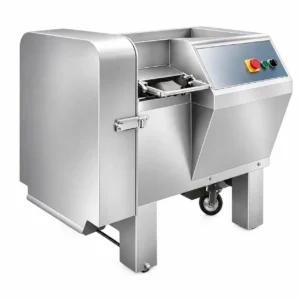
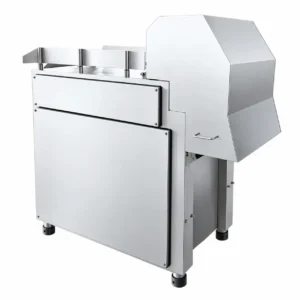
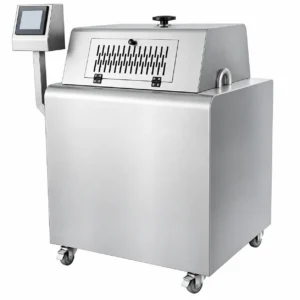
Description
| Parameter | JR-D120 | JR-D200 | JR-D300 |
|---|---|---|---|
| Capacity | 1.0–1.5 t/h | 2.0–3.0 t/h | 6–12 t/h |
| Power | 7.5 kW | 37 kW | 55 kW |
| Voltage | 380V / 50Hz | 380V / 50Hz | 380V / 50Hz |
| Screw RPM | 246 | 170 / 260 | 47 |
| Machine Weight | 300 kg | 1,750 kg | 2,100 kg |
| Dimensions (L×W×H) | 950×550×1050 mm | 1800×1500×1700 mm | 2280×1210×1800 mm |
| Drive | Gear box | Gear box | Gear box |
| Frozen Meat Temp. | −18°C and below | −18°C and below | −18°C and below |
| Construction | SUS304 stainless | SUS304 stainless | SUS304 stainless |
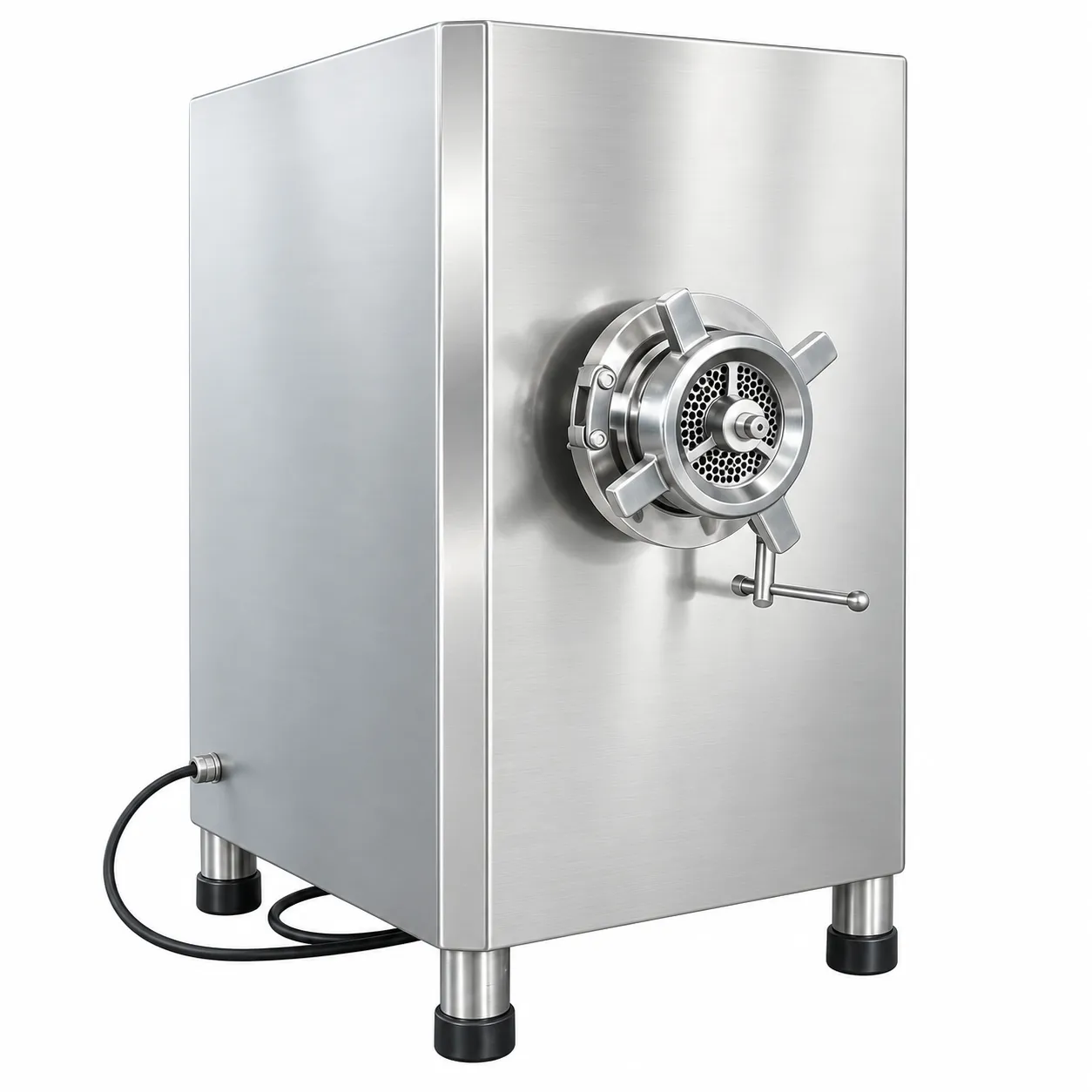
Frozen and Fresh Meat Grinder — Commercial Industrial Series
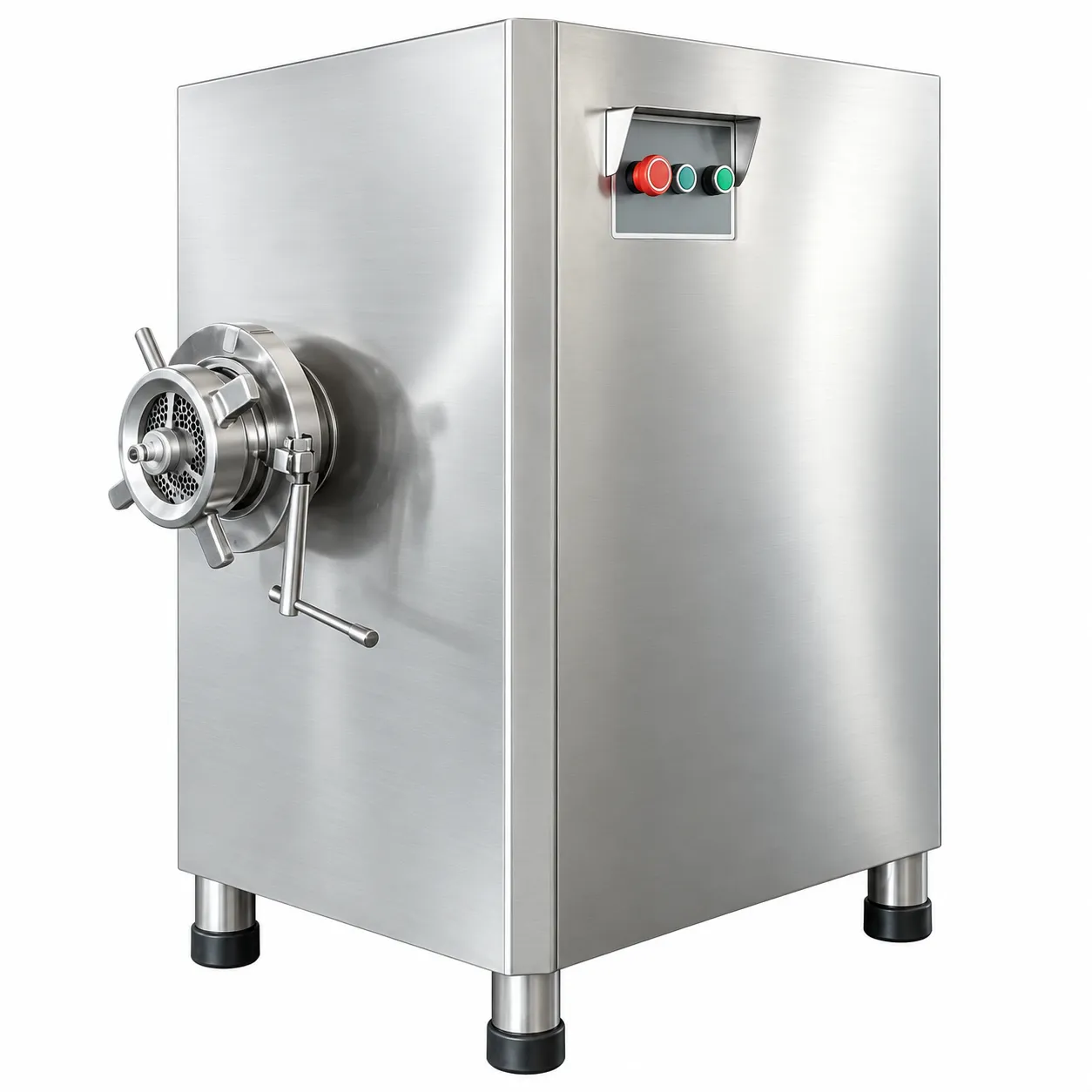
The JR-D Series Frozen and Fresh Meat Grinder is a heavy-duty commercial meat grinder capable of grinding frozen meat at -18°C and below without prior thawing, producing minced meat for sausage filling, patties, and further processed meat products while preserving muscle fibre structure, minimising temperature rise, and maintaining product freshness. Three models cover 1.0 to 12 tonnes per hour output capacity to match the processing scale of facilities from regional butcheries to large industrial operations.
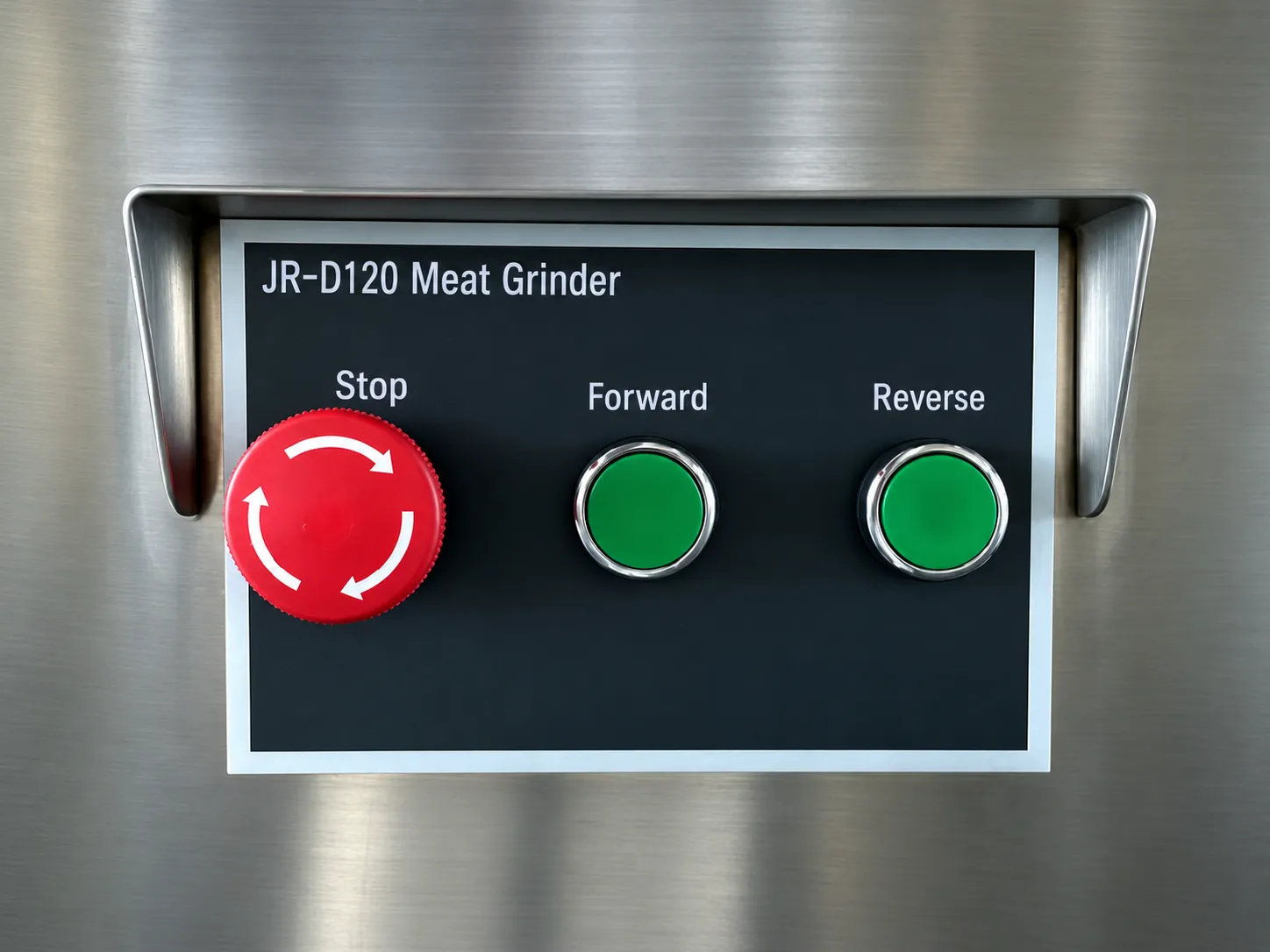
The gear box transmission is the mechanical foundation of the JR-D Series’ frozen-meat processing capability. Unlike belt-drive systems that slip under high load, the gear box transmits full motor torque directly to the grinding screw throughout the cutting cycle. At the load levels required to process -18°C frozen meat directly, this torque consistency is the difference between a machine that processes frozen material smoothly and one that stalls, overheats, or damages the cutting assembly under load.
No Thawing Required: The Core Production Advantage
Conventional meat grinding workflows require frozen raw material to be partially thawed before grinding. Partial thawing introduces protein hydrolysis and bacterial growth in the thawing boundary layer, reducing finished product shelf life; and it requires refrigerated thawing space, time, and energy that represent a compounding operational cost for every tonne processed. The JR-D Series eliminates this step entirely by processing frozen material directly at -18°C, preserving meat freshness, extending shelf life, and reducing the total refrigeration cost of the processing cycle.
Grinding frozen meat at -18°C also preserves intact muscle fibre bundles through the grinding step. Partially thawed meat’s fibres have already begun to soften, and grinding shear tears these weakened fibres rather than cutting them cleanly. The result in finished products is a coarser, less cohesive mince with poorer water-holding capacity — the primary cause of increased cooking loss in sausages made from thawed-then-ground mince versus frozen-ground mince.
Cutting Head and Blade Assembly
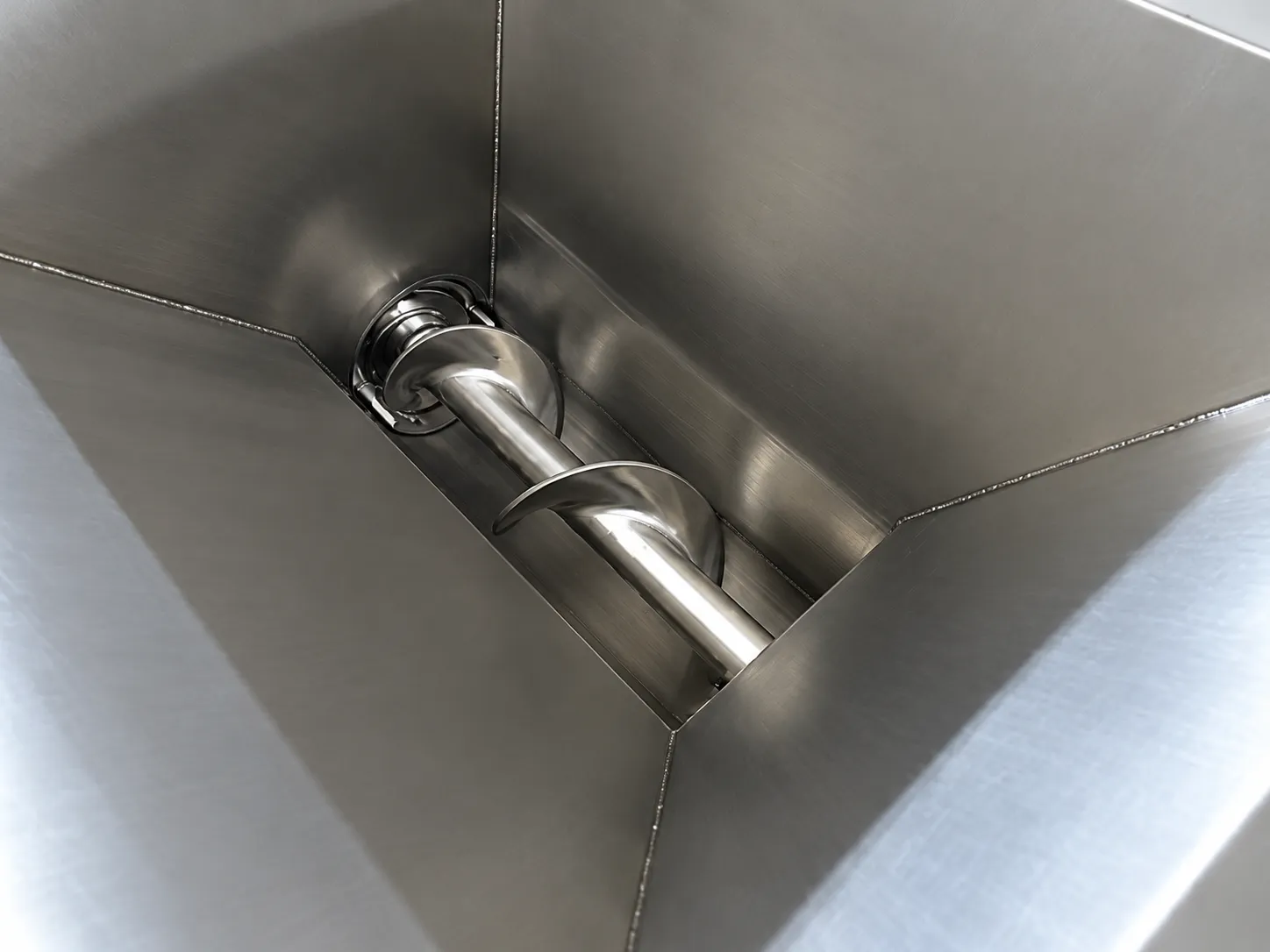
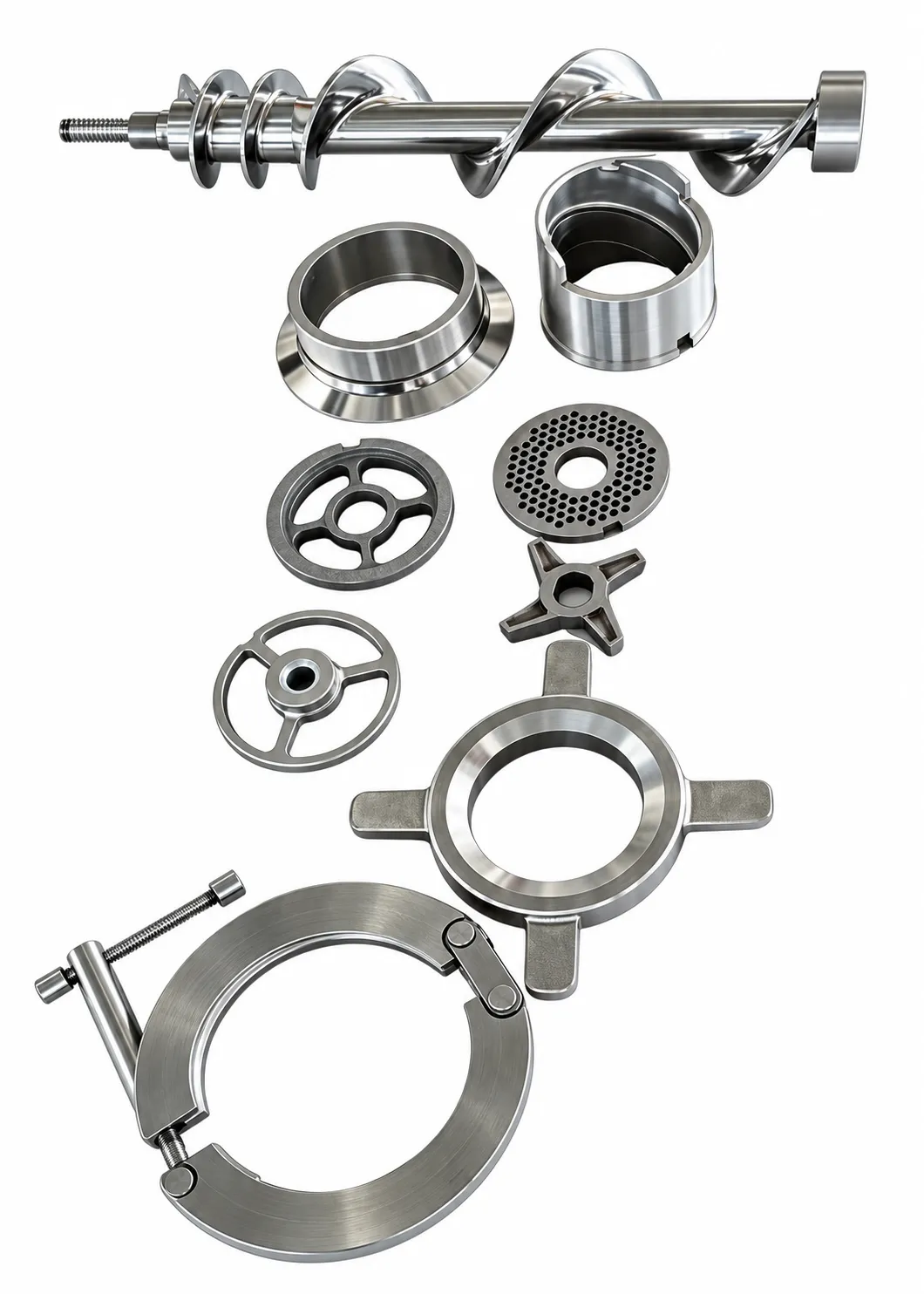
The cutting head assembly comprises the auger screw, cutting plate(s), and blade set. All components are manufactured from food-grade steel rated for repeated high-load contact with frozen material. The cutting plate orifice size determines the output mince particle size — different plate specifications are available depending on the downstream application: fine plates for sausage emulsification, medium plates for coarser sausage filling, and coarse plates for burger patties and formed meat products. Specify your required output particle size when enquiring for plate size recommendations.
Choosing Between JR-D120, JR-D200, and JR-D300
The three JR-D models cover a capacity range from 1.0 t/h to 12 t/h. Selection is driven primarily by required shift output:
- JR-D120 (1.0–1.5 t/h, 7.5 kW, 300 kg): Entry commercial scale. Compact footprint (950×550 mm). Suitable for butcheries, deli operations, and facilities processing up to 4 tonnes per 8-hour shift.
- JR-D200 (2.0–3.0 t/h, 37 kW, 1,750 kg): Mid-scale industrial. Covers the 8–12 t/day output range typical of regional sausage processing facilities.
- JR-D300 (6–12 t/h, 55 kW, 2,100 kg): Large industrial. Continuous processing for vertically integrated facilities feeding multiple downstream filling and processing lines simultaneously.
About the Manufacturer
Founded in 1999, Shijiazhuang Sunshine Machinery operates a dedicated factory with CNC machining for cutting heads, blade frames, and precision mechanical components. Every machine undergoes an 8-hour full-load test before shipment. With over two decades of production experience, we supply directly to processing plants worldwide. Our South American entity in Limeira, São Paulo provides regional support.
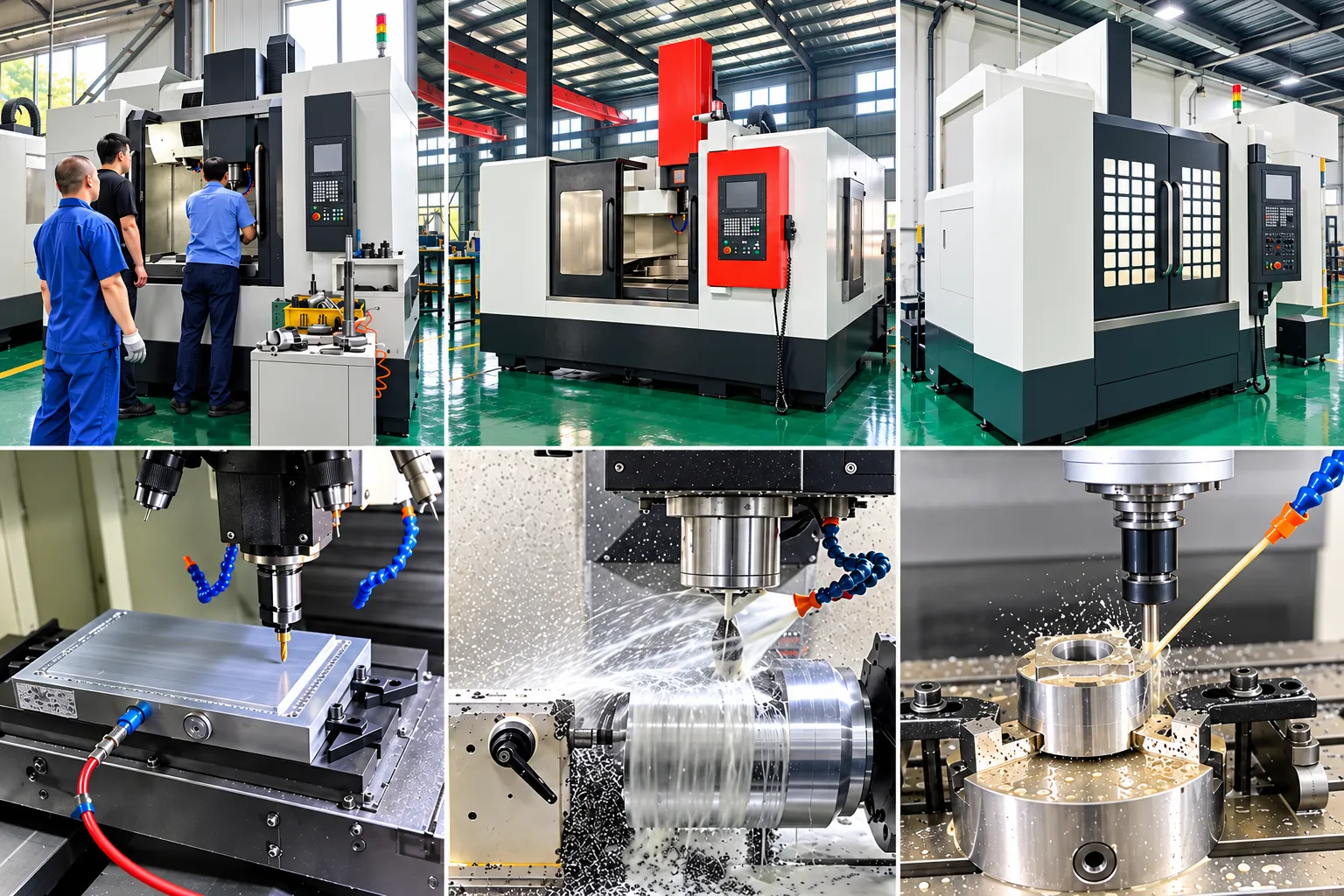
Our mandatory pre-shipment protocol requires every unit to run at 100% rated capacity for eight uninterrupted hours, confirming all systems meet specification before crating. Test logs available.
Our standard warranty is one year from arrival, covering the full machine: drive unit, cutting mechanism, frame, and controls. A pre-packed quick-wear replacement set ships with every order to support first-year maintenance without parts delays.
Frequently Asked Questions
What cutting plate (orifice) sizes are available?
Cutting plates are available in a range of orifice sizes from fine (3–5 mm, for emulsification and fine sausage filling) through medium (8–13 mm, for coarser sausage and burger applications) to coarse (20 mm+, for pre-grinding before a second-pass fine grind). Please specify your downstream application and target output texture when enquiring for plate recommendations.
Can the JR-D200 and JR-D300 grind fresh (non-frozen) meat as well as frozen?
Yes. All three JR-D models are designed for both frozen and fresh meat. When grinding fresh meat, the load on the gear box and cutting assembly is significantly lower than when grinding frozen material, so the machine operates with a wider safety margin and longer blade service intervals than when processing frozen product.
What is the maintenance schedule for the cutting blades?
Blade resharpening or replacement interval depends on the volume and hardness of product processed, the plate orifice size, and whether bone fragments are present in the raw material. Indicative interval for a facility grinding 2 t/shift of boneless frozen beef: blade inspection every 30–40 production hours. Full maintenance schedule including blade inspection criteria is in the English-language operation manual.
Is the JR-D120 suitable for grinding bone-in meat?
The JR-D120 is rated for boneless frozen and fresh meat. For bone-in grinding applications, the JR-D200 or JR-D300 with appropriate cutting plate and blade specification is required. Please specify if bone-in grinding is required when enquiring.
How is the grinder cleaned between different meat species?
The cutting head assembly (auger, plates, blades) disassembles for manual cleaning between species. The machine body is designed for high-pressure washdown. The separated raw material platform prevents cross-contamination during operation. Full species-change cleaning procedure is in the operation manual.
Order & Logistics
Ready to Order?
Production and testing: 30 to 45 working days from order confirmation. Ships FOB Tianjin as default; CIF and EXW on request. T/T 30% deposit, balance before shipment.
MOQ: MOQ for complete equipment is assessed by configuration and order value. One to five sample units are available for new clients at sample pricing for quality verification before volume orders.
Request a Quote
Our team responds within 1 business day. Include your target throughput, product type, raw material state, and destination port.
Gear Box Transmission: The Right Choice for Frozen Meat Grinding
The gear box transmission is the mechanical foundation of the JR-D Series’ frozen-meat processing capability. Belt-drive grinders — common in lower-cost equipment — transmit motor torque through a belt that slips under high load. When a grinder attempts to process fully frozen material at -18°C, the cutting resistance is three to five times higher than for fresh meat. A belt-drive system under this load will slip, stall, or overheat the motor before completing the cut. The JR-D’s gear box transmits 100% of motor torque to the grinding screw at all times, maintaining consistent throughput regardless of raw material temperature or hardness variation.
This torque consistency also protects the cutting plate and blade assembly: a stalled screw reversal — the consequence of belt slip under high load — imposes severe reverse shock loads on the blade and plate. The gear box’s positive engagement eliminates this reverse shock mechanism, extending blade and plate service life significantly compared with belt-drive machines at equivalent frozen-meat throughput volumes.
How to Order
When enquiring about the JR-D Series, include: your required shift capacity (kg/h or kg/shift), raw material state (frozen temperature, fresh, or both), target output mince particle size, and destination port. Contact Contact Our Sales Team or visit Submit an Enquiry for a model recommendation and combined equipment quotation.